Is the leak barrier on your roof protecting your home?
Most leaks start due to poor installation. Learn where ice and water shield goes on a roof, why it matters with ice dams, and what to look for in a bid from an Eau Claire roofing company.
It's February in Eau Claire. The snow has been on the roof for weeks; a sunny afternoon melts the top layer, and by night, that water refreezes into a ridge of ice at the gutter. The next melt has nowhere to go but backward, up under the shingles. Whether that water ends up on your living room ceiling depends on a layer you'll never see once the roof is done.
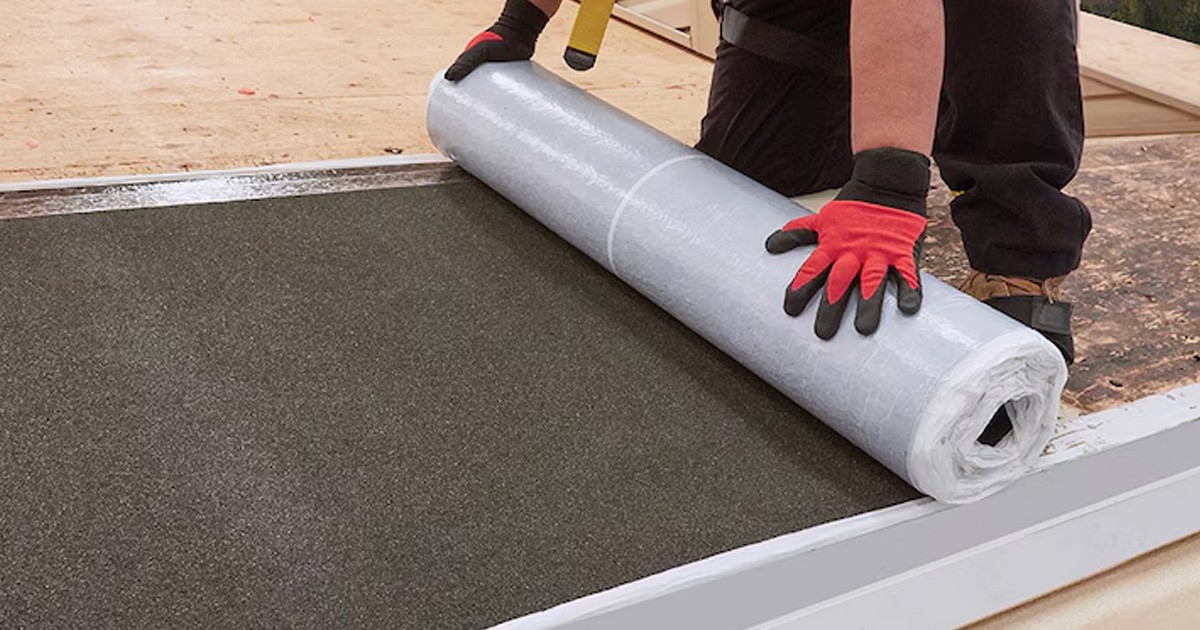
A leak barrier is a rubberized, self-adhering membrane installed directly on the roof deck. It seals around every nail driven through it, so water that sneaks under the shingles can't follow the nail holes into your house. Everywhere else, the deck gets a synthetic underlayment. The shingles shed water; the leak barrier is the backup where water is most likely to back up.
Where It Goes on a Rock & Tait Roof
Most roof leaks start where something was installed wrong: where the roof meets a wall, in a valley, around a chimney, or at a pipe. Those are the details we obsess over.
- Eaves: 6 feet up the roof. That covers the zone where ice dams form. On deep overhangs, we add rows so it reaches 24 inches past the warm wall, as code requires.
- Valleys: 3 feet into every valley, with California-cut (closed-cut) valleys over full ice and water.
- Sidewalls: at least 5 inches up every wall, before the step flashing goes on.
- Penetrations: at least a 20-inch square around every pipe, vent, and skylight, plus new flashing at each one.
- Hips and rakes: available as an upgrade, written into your proposal so you know exactly what you'regetting.
Why not cover the whole roof? On most steep roofs, full coverage isn't needed and can trap moisture in the deck. We put leak barrier where water backs up and let the rest of the roof breathe. On low-slope sections below 3:12, we strongly recommend a membrane roof instead; shingles can go down to 2:12 only with leak barrier over the entire deck.
It protects you from ice dams. It doesn't stop them.
This is the part most bids skip. Ice dams start in the attic: warm, moist house air leaks up, warms the roof deck, melts the snow, and the water refreezes at the cold overhang. Every inch of snow on the roof acts like about R-1 of insulation, so a deep snowpack makes it worse.
A leak barrier buys you protection while that cycle plays out. The fix is air sealing, insulation, and balanced ventilation, which is exactly why we look at the attic on every roof we replace. A roof replacement is the one time in 20+ years your attic is open from above. On more than half of our roofs, we use that access to fix ventilation and insulation problems that are hard to reach any other way.
Manufacturer warranties don't cover problems caused by inadequate attic ventilation. A perfect shingle over a poorly vented attic can still leave you without coverage.
Why Leak Barrier Differs so Much from Bid to Bid
Some quotes include only the code minimum at the eaves. Others say "ice and water shield" with no detail at all. On day one, those roofs look identical. In year five, the difference shows up as a stain under a skylight or along a wall. Before you sign, ask every roofer:
- How far up the roof does the leak barrier go at the eaves?
- Is it in every valley, and how wide?
- How far up the sidewalls, and around which penetrations?
- Are hips and rakes included, or is that an upgrade?
- Will you check my attic ventilation and insulation?
If the answers are vague, ask for them in writing. You'll get them in writing from us.
Get a Roof You Don't Have to Watch in February
How great would it feel to watch a February thaw from the couch, without glancing at the ceiling? Waiting usually costs more. A slow leak behind an ice dam soaks insulation, rots decking, stains ceilings, and traps moisture, which leads to mold.
A family in a 1½-story home outside Altoona called about a ceiling stain that appeared every March over the upstairs bedroom. Their last roofer had installed leak barrier only on the first course at the eaves. When we tore off the roof, the deck along the kneewall was soft, and the attic had almost no ventilation. We replaced the bad sheathing, ran leak barrier 6 feet up and 3 feet into the valleys, foamed and vented the kneewall area, and balanced intake and exhaust. The next spring, the bedroom ceiling stayed clean, and the kids got their room back.
Call Rock & Tait at 715-723-7200 or request a free estimate. We serve Eau Claire and every city within 30 miles, including Chippewa Falls, Altoona, Menomonie, Lake Hallie, Bloomer, Elk Mound, Colfax, Fall Creek, Osseo, and Augusta. We'll inspect your roof and attic, show you exactly where the leak barrier goes, and put your options in writing.