Lower energy bills are not the only reason to insulate.
While improving energy efficiency is an important reason to insulate, the benefits of properly installed insulation and air sealing go well beyond monthly utility costs.
More Consistent Temperatures Throughout Your Home
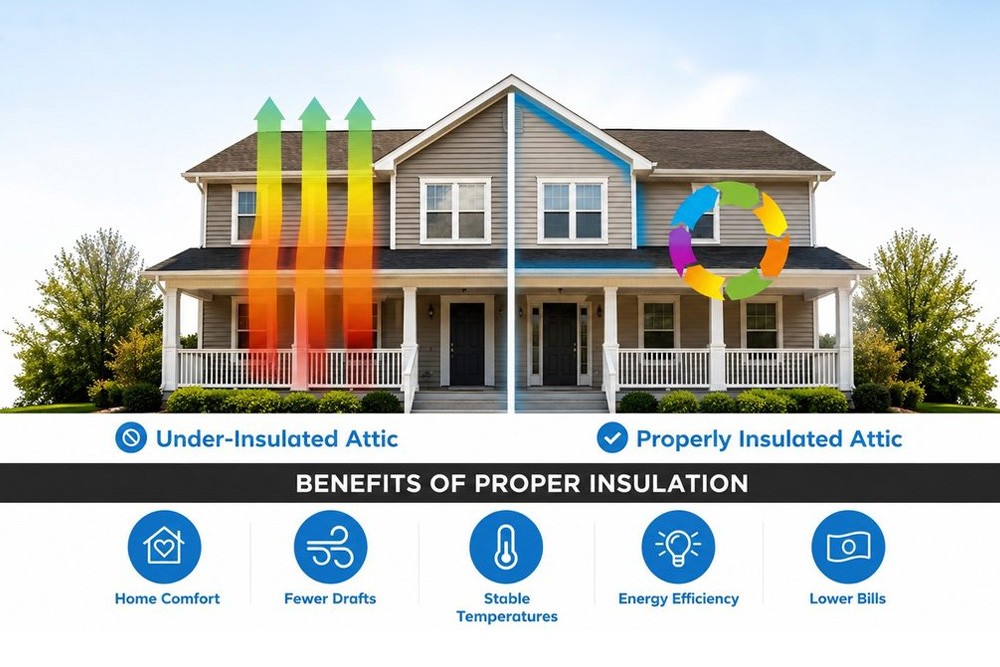
Does one room always seem colder than the rest of the house? Are bedrooms upstairs noticeably warmer in the summer or colder in the winter? Uneven temperatures can signal that your home is losing conditioned air or that your insulation is inadequate.
Proper insulation helps slow the transfer of heat through the home's ceilings, walls, and other areas of the building envelope. Air sealing addresses another important source of energy loss by reducing unwanted air movement through gaps, cracks, penetrations, and other openings.
Together, insulation and air sealing can help create:
- More consistent temperatures from room to room
- Fewer cold floors and ceilings
- Reduced drafts and uncomfortable air movement
- A more comfortable second floor or upper-level living space
- Better temperature control throughout the home
The result is a home that feels more comfortable instead of one where your heating and cooling system is constantly trying to compensate for temperature differences.
Your HVAC System Doesn't Have to Work as Hard
Your heating and cooling equipment is responsible for maintaining the temperature inside your home. But when heat escapes in winter or enters in summer, your HVAC system has to run longer to maintain the temperature you've selected.
Improving your home's insulation and air sealing can reduce the amount of conditioned air and energy lost through the building envelope. That can help your heating and cooling system operate more efficiently and may reduce how frequently or how long it needs to run.
Proper insulation doesn't replace an efficient HVAC system, but it can help the system do its job more effectively.
Improved Energy Efficiency
Energy efficiency is still one of the biggest benefits of insulation. A properly insulated and air-sealed home can reduce unwanted heat transfer and air leakage, helping you get more from the energy you use to heat and cool your home. Depending on the home's existing insulation levels, air leakage, construction, and other factors, improvements may contribute to lower heating and cooling costs.
It's important to remember that insulation is only one part of the equation. Attic insulation, air sealing, ventilation, windows, doors, HVAC equipment, and other components all affect a home's overall energy performance.
Better Attic Conditions Can Help Address Ice-Dam Risk
For homeowners in the Chippewa Valley and other cold-weather areas of Wisconsin, attic performance matters most in winter. Ice dams can form when heat escaping from the living space warms portions of the roof while the roof edges remain cold. Snow can melt on the warmer areas of the roof and then refreeze near colder roof edges, potentially creating an ice dam.
Proper attic insulation and air sealing can help reduce heat transfer from the conditioned space into the attic. Proper ventilation is also important for maintaining appropriate attic conditions. However, insulation alone isn't an ice-dam solution. The condition and design of the roof, insulation levels, air leakage, ventilation, snow and weather conditions, and other factors can all play a role. That's why it's important to look at the entire roof and attic system, rather than treating insulation, ventilation, or roofing as completely separate issues.
Why Insulation and Air Sealing Work Together
Insulation and air sealing do different jobs, and both matter. Insulation slows heat transfer. Air sealing reduces unwanted air movement. A well-insulated attic can still lose energy if warm, conditioned air is escaping through gaps around light fixtures, plumbing penetrations, electrical wiring, ductwork, attic hatches, top plates, or other openings. That's why a comprehensive approach often includes identifying and sealing significant air leaks before adding or improving insulation.
Roofing, Insulation, Air Sealing and Ventilation Are All Connected
Your roof and attic aren't independent systems. Roofing, insulation, air sealing, and ventilation all work together as part of the home's building envelope. When these components are properly planned and installed together, they can help:
- Improve indoor comfort
- Reduce unwanted heat transfer
- Improve overall energy efficiency
- Support more consistent indoor temperatures
- Reduce conditions that can contribute to winter ice dams
- Help your HVAC system operate more effectively
- Protect the performance and longevity of the roof and attic system
Whether you address insulation and air sealing during a roof replacement or as a separate home improvement project, the goal is the same: a more comfortable, energy-efficient home from top to bottom.